

When people talk about “self-care,” they usually mean gym sessions, meditation apps, and eight hours of sleep. What rarely makes the list — even though it belongs there — is sexual self-care. For men especially, solo pleasure is still treated as something to rush through quietly rather than a normal, healthy part of overall wellbeing — and tools like an automatic stroker are still dismissed as novelties rather than what they can be: training equipment for better control.
That silence has a cost. Because so few men ever talk about how they practice solo pleasure, most never update the habits they formed as teenagers — fast, quiet, and finished before anyone notices. Those habits follow them into adulthood, and sometimes into the bedroom, where speed-trained reflexes and performance anxiety are two of the most common complaints men bring to sex therapists.
It’s time to change that framing. Here’s what a more intentional approach to solo play can actually do for your body and mind — and how modern tools can help you get more out of it.
The Real Health Benefits of Solo Play
Masturbation is one of the most common human behaviors across every culture and age group, and major health institutions like the Cleveland Clinic link it to documented benefits including stress relief, better sleep, and pain reduction.

Stress relief. Orgasm triggers a release of endorphins, dopamine, and oxytocin — your body’s natural mood regulators. Cortisol, the primary stress hormone, drops in the aftermath. Many men find solo play one of the fastest and most reliable ways to decompress after a high-pressure day, and unlike a drink or doomscrolling, it comes with no hangover.
Better sleep. That heavy-limbed relaxation after climax isn’t your imagination. The hormonal shift that follows orgasm — particularly the release of prolactin — promotes drowsiness and can make it easier to fall asleep. It’s one reason so many people naturally reach for solo play at bedtime, and it beats staring at the ceiling.
Body literacy. Knowing what you respond to — what pace, what pressure, what builds you up slowly and what tips you over — makes you a more confident and communicative partner. You can’t ask for what you want if you’ve never explored it yourself. Sex educators consistently point to solo exploration as the foundation of partnered confidence.
Sexual function. Regular arousal and erection keep blood flowing through penile tissue, which is genuinely a use-it-or-lose-it system. Some research also suggests that regular ejaculation may play a role in long-term prostate health, though scientists are still working out the exact relationship — so treat that as a promising signal, not a prescription.
Mood and self-connection. Beyond the biochemistry, deliberately setting aside time for your own pleasure is a small act of self-respect. Men are rarely encouraged to treat their own bodies as worth slowing down for. Doing so — without shame, without rushing — tends to spill over into how you carry yourself elsewhere.
The Problem: Most Men Rush It
Here’s the catch — most of those benefits get diluted by habit.
Years of “quick and quiet” conditioning teach many men to finish as fast as possible. The pattern made sense at seventeen with thin walls and no lock on the door. But repeated for a decade or two, it trains your nervous system toward speed: the same grip, the same motion, the same two-minute sprint to release. Over time this can contribute to three problems:
- Speed-trained reflexes. Your body learns to climax quickly because that’s what you’ve practiced thousands of times. When you’d rather last longer — solo or with a partner — the reflex fights you.
- Narrow arousal patterns. If one specific motion is the only thing that gets you there, anything different (including a partner’s touch) can feel underwhelming. This is trainable in both directions.
- Release instead of restoration. A rushed session relieves pressure but skips most of the actual wellness payoff — the wind-down, the mindfulness, the sleep-friendly afterglow.
The fix is what sex educators call mindful masturbation: slowing down, varying stimulation, and paying attention to your arousal instead of racing past it. Treat it less like scratching an itch and more like a workout for control.
Edging: The Core Technique
The most practical mindful technique — and the one with the most direct payoff for stamina — is edging: deliberately building close to climax, backing off before the point of no return, letting arousal settle, and repeating.

Practiced regularly, edging teaches you to recognize the sensations that come just before ejaculation becomes inevitable. That recognition is the whole game: men who struggle with lasting longer usually aren’t lacking willpower — they simply don’t notice the point of no return until they’re already past it. Edging makes that moment familiar, and familiarity gives you the option to slow down, change stimulation, or breathe through it.
A simple starting routine:
- Build arousal slowly — aim for 60–70% intensity, not a sprint.
- Approach the edge and hold there, paying attention to what it actually feels like.
- Ease off before climax — reduce or change the stimulation rather than stopping dead.
- Let arousal settle for 30–60 seconds, then begin again. Three to four rounds per session is plenty.
Do this two or three times a week and most men notice meaningfully better awareness and control within a month or two. It’s unglamorous, consistent practice — exactly like any other training.
Where an Automatic Stroker Fits In
This is exactly where a well-designed automatic stroker earns its place — not as a novelty, but as a training tool.
Manual habits are hard to break precisely because your hand always does what it’s used to. The moment arousal climbs, autopilot takes over and speeds up. A device with independent, adjustable stimulation takes that autopilot away: the machine holds whatever pace you set, and your job becomes responding to sensation rather than repeating a motion.
The TitanStroke Aetolia Automatic Stroker is a good example of how far this category has come. Instead of a single motor doing one thing, it runs three separate motions on three separate controls — thrusting, suction, and vibration — each adjustable on its own, each with a dedicated button. For mindful practice, that independence matters more than it might sound:
- Stamina training: Set a slow thrusting speed and hold yourself near the edge. When intensity climbs too fast, dial one sensation down instead of stopping entirely — a much closer simulation of real-world pacing than the all-or-nothing of a hand.
- Breaking the speed habit: With 5 thrusting, 7 sucking, and 9 vibration settings, you can build sessions that look nothing like your usual routine — suction only, slow thrust with light vibration, or all three layered — retraining your arousal to respond to variety rather than one familiar motion.
- Staying present instead of managing hardware: The LED display shows your active mode, level, and battery at a glance, and the buttons sit directly below it, so adjusting one sensation never interrupts the others. The twin detachable handles clip on with a strap for a braced, two-handed hold — at full stroke the leverage matters, and a steady grip means your attention stays on sensation, not on wrestling with the device.
- Privacy supports relaxation. The Aetolia offers a private audio option through earphones, keeping immersive sound entirely to yourself. That’s not a gimmick: genuine relaxation is when the stress-relief benefits of solo play actually land, and worrying about noise is the fastest way to lose it.
None of this requires a machine, to be clear — edging works with a hand. But the machine removes the single biggest saboteur (your own trained reflexes) and gives you precise, repeatable control over intensity, which is what deliberate practice needs.
What to Look For in an Automatic Stroker
If you’re comparing options — this one or any other — the features that matter for a wellness-first buyer are:
- Independent controls for each type of stimulation, so you can adjust one without resetting everything. Single-button toys that cycle through preset combos are fine for novelty, poor for training.
- A readable display or clear indicators. Fumbling through modes blind pulls you out of the moment.
- A secure, comfortable grip — weight matters at full stroke, and a two-handed brace beats a slippery cylinder.
- Full disassembly for cleaning. More on this below; it’s non-negotiable.
- A body-safe, removable sleeve (TPE or silicone) with real texture, not a sealed unit you can’t inspect or dry.
Automatic Stroker Hygiene: Cleaning Matters
No conversation about toys and wellness is complete without cleaning, because a poorly maintained sleeve is a genuine skin-health risk. Soft sleeve materials like TPE are slightly porous — comfortable and warm, but capable of harboring bacteria if left damp.
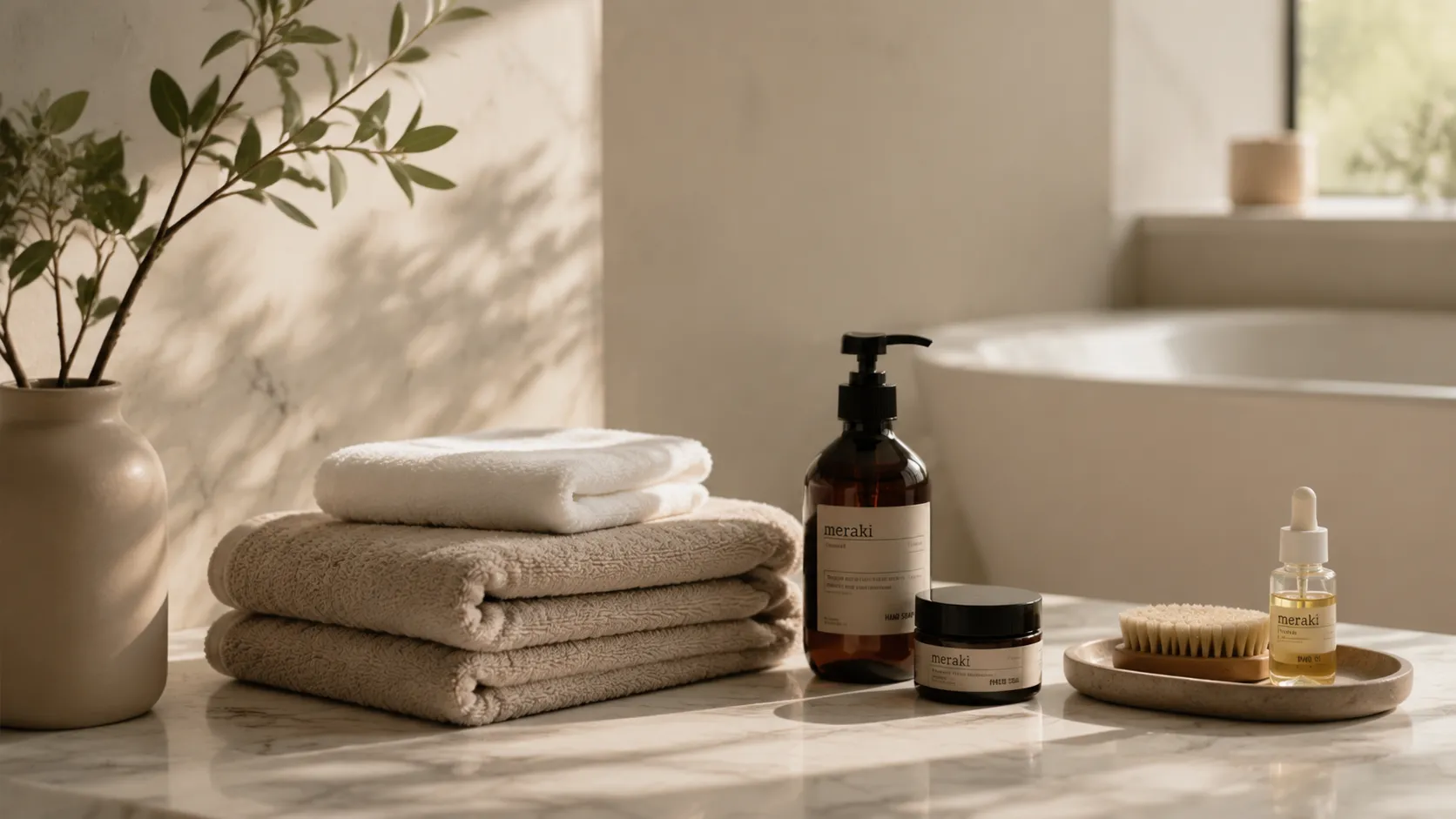
The routine is simple:
- Disassemble fully. Separate the sleeve from the body after every use. The Aetolia’s end cap, sleeve, and handles all detach in seconds by design — the sleeve lifts away from the shell, so nothing stays sealed and damp inside the machine.
- Wash the sleeve with warm water and mild soap or a dedicated toy cleaner. Work through the textured tunnel, not just the opening.
- Dry completely. Air-dry inside and out before reassembly or storage. Trapped moisture is the single biggest hygiene mistake with any sleeve toy.
- Store clean and dry, away from heat and dust. The water-resistant body of the machine itself just needs a wipe-down — don’t submerge any motorized unit.
A toy you can fully take apart isn’t a convenience feature; it’s a hygiene feature. If a product can’t be opened and dried, it can’t really be kept clean.
Automatic Stroker FAQ
Is using an automatic stroker “cheating” or a sign something’s wrong? No. It’s a tool, the same way a foam roller is a tool. Most men who use one are in relationships, sexually active, or both. Deliberate solo practice tends to improve partnered sex — better control, broader arousal patterns, less anxiety.
How often should I practice edging? Two or three focused sessions a week is plenty. This is training, and like any training, recovery and consistency beat volume. Daily marathon sessions aren’t necessary and can leave you desensitized or sore.
Can I overdo it? If solo play starts crowding out sleep, work, or partnered intimacy, or you notice irritation, scale back — that’s your signal, same as overtraining at the gym. Used a few times a week with decent lube and a clean sleeve, a stroker is very low-risk.
Does it matter what lube I use? Yes — use a good water-based lubricant with a TPE sleeve. Oil- and silicone-based lubes can degrade soft sleeve materials over time. This applies to virtually all sleeve toys, not just this one.
The Takeaway
Solo pleasure isn’t a guilty habit to rush through — it’s a legitimate part of men’s sexual health, with real benefits for stress, sleep, confidence, and control. Approached mindfully, it becomes practice: for stamina, for body awareness, and for being a more present partner. The tools have caught up, too — a modern automatic stroker turns that practice from a battle against your own reflexes into something precise, adjustable, and genuinely restorative.
If you’re ready to upgrade from autopilot to intention, explore the TitanStroke Aetolia Automatic Stroker — three independent motions, full control, a display that keeps you present, and a fully disassemblable design made for exactly this kind of deliberate, healthier solo play.
This article is for general education and is not medical advice. If you have concerns about sexual function or health, speak with a healthcare professional.